Is Travel Car Seat for Under-2 Toddlers Worth Selling?
Based on 80+ Reddit posts across 11 communities: Travel Car Seat for Under-2 Toddlers scores 6/10 — worth watching. This is a high-trust, high-liability category — viable only for sellers with serious compliance budget and a long brand-building runway. The standalone shock-indicator accessory is the only entry point realistic for a new seller without juvenile-product infrastructure.
Opportunity Score
This is a high-trust, high-liability category — viable only for sellers with serious compliance budget and a long brand-building runway. The standalone shock-indicator accessory is the only entry point realistic for a new seller without juvenile-product infrastructure.
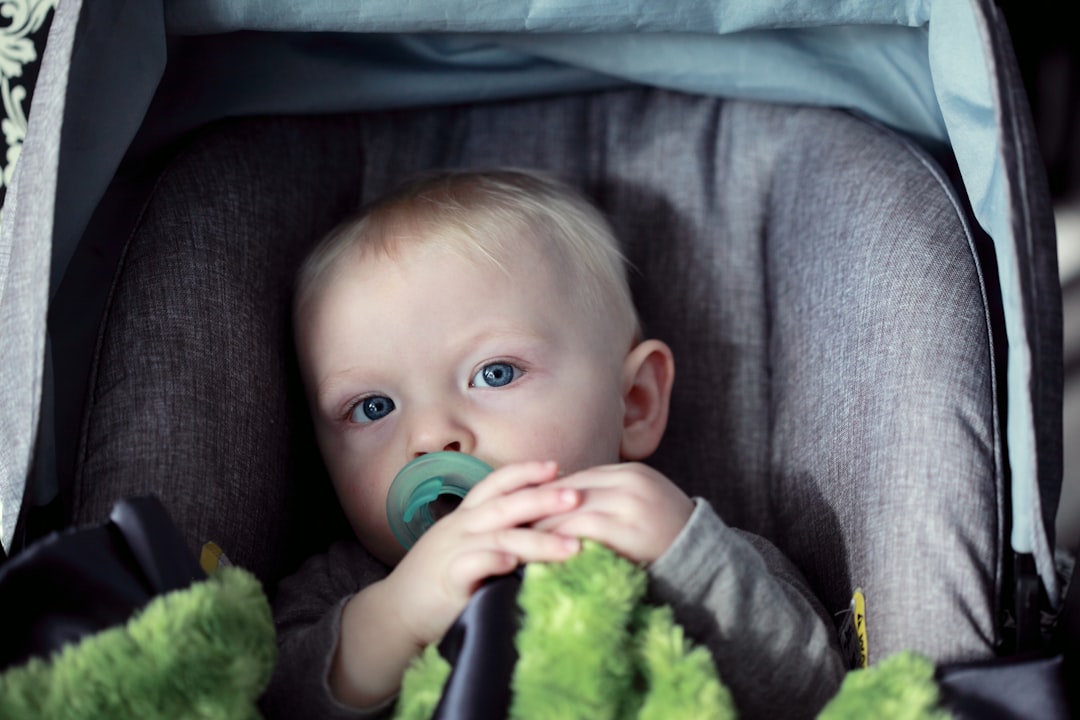
Photo by Alexander Grey on Unsplash
Demand Validation
Reddit traffic is heavy and recurring across r/beyondthebump, r/Mommit, r/CPST, r/Travelwithkids, r/daddit, r/DisneyPlanning, and r/parentsofmultiples. Posts get 50-180+ comments on the same dilemma: how to get a car seat to a destination without (a) lugging a 15+ lb seat through the airport, (b) checking the family's primary seat and risking invisible structural damage, or (c) trusting a rented seat with unknown crash history. Multiple parents explicitly say they bought a second cheaper seat just for travel — confirmed repeat-buyer behavior.
At a Glance
Verdict
Worth watching
Top buyer complaint
Parents do not trust that their checked car seat has survived the trip intact and do not trust rented car seats — and the existing market gives them only $60 disposable or $400 ultralight choices with nothing in between.
Best opening angle
Lead with the invisible-damage problem ('would you know if your child's car seat was already broken?'), then sell either (a) a travel-specific seat designed to survive cargo handling and meet 213b, or (b) a low-cost damage-evidence add-on that addresses the trust gap directly.
Research depth
80 posts across 11 communities
Seller Insight
Who should sell this
Established juvenile-product brands with existing FMVSS 213 compliance expertise and access to crash testing facilities. For accessories: sellers with Amazon brand-building capability and product safety category experience.
Who should avoid this
First-time sellers, dropshippers, and any operator without product liability insurance scaled for juvenile products. Foreign manufacturers without an FMVSS 213-certified US compliance partner should not enter the car seat category itself — Federal regulations and the imminent 213b update make non-compliant imports unsellable.
Best positioning angle
Lead with the invisible-damage problem ('would you know if your child's car seat was already broken?'), then sell either (a) a travel-specific seat designed to survive cargo handling and meet 213b, or (b) a low-cost damage-evidence add-on that addresses the trust gap directly.
Competition note
Established players: Cosco Scenera ($60), WAYB Pico ($399, with 2019 recall history), Doona ($550, infant only), Evenflo Sonus 65 ($120), Graco Extend2Fit ($250). Travel-bag accessory market is saturated (JL Childress, Gorilla Grip, VolkGo all $25-53). The shock-indicator angle is uncontested in this consumer category.
Pricing band
$10-15 (shock indicator add-on) / $120-180 (lightweight travel seat) / $250-350 (post-Doona seat with wheels)
Margin potential
medium
Shipping complexity
medium
Return risk
high
Seasonality
medium
Pain Points — 6 identified
Checked car seats suffer invisible structural damage
Airport workers and CPSTs both confirm: counter-checked car seats get thrown around in cargo holds, creating hairline fractures that compromise crash performance but leave no visible mark. Parents have no way to know if a returned seat is still safe.
“Counter check it... it will go down belts to TSA, then tumble down them into a bagroom where it will get loaded onto carts. There is a fair chance it will get thrown from the cargo door to the other end of the cargo pit. Best option would be to buy a second, cheaper and lightweight car seat to gate check.”
“Husband worked in airports and sees how mistreated checked car seats are. The way they are thrown around can cause structural damage that may not be seen, which can affect how the car seat acts in a crash.”
“Pack it in a well-fitting box padded with towels/blankets. The box will not necessarily prevent it from getting damaged, but unlike a bag it will SHOW EVIDENCE of mishandling, so you have a chance to determine (usually by contacting the manufacturer with photos) if it's safe to use.”
Cosco Scenera is the default ($60), but it is heavy and feels basic
Every airplane travel thread converges on the Cosco Scenera Next as the budget answer. Parents buy it not because it's good but because it's $50 and they don't mind it getting destroyed. There's no clear lightweight option between $60 (Cosco) and $399 (WAYB Pico).
“If you are going to pay for a harness anyways, use that money to get a cosco scenera seat. Inexpensive, safe, you won't have to check your other seat, and you won't have to rent a seat.”
“A cosco scenera will run you sub-$50 at Walmart and weighs next to nothing. We would bring the travel seat, park at the airport leaving the regular seat in the car. I would never check it on the way out (lest it not make it to our destination), nor would I trust a rental seat.”
Rented car seats are universally distrusted
Across every thread parents reject rental car seats: unknown crash history, unknown cleaning chemicals, age-inappropriate seats supplied (boosters for 3-year-olds), and frequent no-shows even when Uber Car Seat is available.
“I personally would never trust a rented car seat. No way to know that it has truly never been in a crash or cleaned with improper chemicals etc. Way too risky imo”
“I lived in a city where uber had car seats and they cancelled 10 minutes after they were supposed to be picking us up to go to the airport, so now I don't trust not bringing a car seat every where I go.”
No good post-Doona transition seat for travel
Doona dominates the infant phase but expires at 35 lbs / ~18 months. Parents explicitly post 'graduated from Doona, what's next for travel?' with no satisfying answer. The convertible category at this stage is dominated by full-size seats too bulky for airports.
“Well we finally graduated from the Doona. Does anyone have a travel car seat that they highly recommend for a 2.5 year old? No budget.”
“Won't be bringing convertible/revolving car seats since they're too bulky. Is there a good travel car seat (or alternative) that you recommend for this age?”
Car-free urban parents have no rideshare-friendly option
Families without cars use car seats only in taxis, Ubers, and occasional rentals — install time matters enormously. Rideshare drivers refuse to wait. Standard car seats are designed for one-time install, not 5-minute taxi setups.
“Britax capsule which we used exactly once to leave the hospital & only a handful of other times when a friend offered to take us to the beach. Otherwise, it's been pretty much unused as taking it around in taxis was a logistical nightmare. In our experience, most rideshare drivers didn't seem happy about waiting while we tried to install the car-seat.”
Carrying the seat at the destination is its own problem
Even when parents successfully get a travel seat to the destination, they're stuck with the question 'what do I do with this at the zoo / restaurant / hotel?' No good portable carry/storage solution exists for the in-destination phase.
“If we bring our own car seat, does that mean we have to lug it around the zoo after getting dropped off by taxi/uber? Surely I've never seen people walk around with travel car seats around the zoo. So how do people do it??”
Seller Opportunities
Mid-price lightweight convertible travel seat ($120-180)
mediumPosition between Cosco Scenera ($60, heavy/basic) and WAYB Pico ($399, recall history). Target 8-10 lb weight, rear→forward facing 5-30 lb, FAA-certified, and explicitly built to FMVSS 213b side-impact standards (mandatory after Dec 2026). Include an integrated backpack carry strap. The market gap is real — every Reddit thread converges on either the $60 cheap seat or the $400 ultralight, with nothing in between.
Damage-evidence indicator stickers / G-force sensors for checked car seats
highStandalone add-on sold separately as a 3-pack of single-use impact indicator stickers ($8-15). Adhesive stickers that change color or display 'TRIGGERED' if exposed to >3G shock during baggage handling. Directly addresses the #1 pain point (invisible structural damage). Multiple CPSTs explicitly recommend 'box it so damage shows' — this productizes that workaround. Low BOM, no FMVSS certification needed (it's not a restraint), Amazon-friendly category.
Post-Doona travel seat for 18-month to 4-year-olds with integrated wheels
lowConvertible rear-to-forward facing travel seat ($250-350) designed for the gap when Doona expires at 35 lbs. Integrated retractable wheels and pull handle so it functions as both car seat and rolling carry-on at the destination. Competes with WAYB Pico but adds the destination-mobility feature Pico lacks (and which Doona owners are conditioned to expect). Requires significant mold investment and meticulous FMVSS 213b compliance — only attempt with experienced juvenile-product manufacturing partner.
Why hasn't this been done?
Buyer pain is real, but that doesn't make every opportunity viable. For each opportunity above, here's the supply-chain or business-model reason it isn't already on the shelf.
Mid-price lightweight convertible travel seat ($120-180)
high confidenceWhy not done yet
The mid-price band is structurally hostile: at $120-180 you compete with the Cosco Scenera and Evenflo Sonus 65 ($120) on price while needing the build quality of premium seats. FMVSS 213b side-impact testing (effective Dec 2026) raises tooling and certification costs, and any aluminum-tube weight reduction risks the same headrest-tube failure mode that triggered WAYB's 2019 recall of 4,558 Picos.
Cost / supply-chain impact
FMVSS 213/213b certification testing alone runs $80-150k per seat configuration. Tooling for a convertible shell is $200-400k. BOM at $35-55 to hit a $150 retail with healthy margin. Amazon FBA + insurance for a regulated category adds 18-25% to landed cost vs unregulated products.
Business-model conflict
Repeat purchase cycle is brutal — one seat lasts the family through travel age, and the seat expires after 6-10 years per FMVSS labeling. No refill or accessory upsell path unless you build a system.
Damage-evidence indicator stickers / G-force sensors for checked car seats
high confidenceWhy not done yet
Single-use shock indicators (ShockWatch labels, Drop-N-Tell) exist as industrial shipping products at $1-3 each, but no one has packaged them as a consumer-facing baby-travel SKU with the right messaging. The technology is mature and unpatented, the buyer education hurdle is moderate, and CPST influencers actively recommend the workaround already. Risk is that parents may not pay $10-15 retail when industrial equivalents are $2 on McMaster-Carr — but the parent audience doesn't shop McMaster-Carr.
Cost / supply-chain impact
BOM under $0.50 per sticker if sourced from existing shock-label OEMs (ShockWatch, SpotSee). Packaging and branding the dominant cost. Retail $9.99-14.99 for a 3-pack. ~70% gross margin achievable. No mold investment, no FMVSS certification (not a restraint). Lead time 4-8 weeks for white-label OEM.
Business-model conflict
None identified — single-use consumable creates natural repeat purchase per trip, complements (does not cannibalize) existing car seat ownership.
Post-Doona travel seat for 18-month to 4-year-olds with integrated wheels
high confidenceWhy not done yet
Doona itself attempted this category and discontinued nothing — they instead launched the Liki Trike for the post-Doona stage rather than extending the wheeled car seat concept. WAYB Pico is the closest existing answer and recalled headrests within 6 months of launch. Integrating wheels into a structural crash component means every wheel attachment point becomes a failure mode under side-impact testing. Counterfeits of Doona are already so widespread that Doona's own retailer pages warn buyers explicitly.
Cost / supply-chain impact
Tooling $400-600k for a foldable + wheeled convertible shell with FMVSS 213b compliance. BOM $80-130 to hit a $300 retail. Crash certification testing $150-300k across configurations. Liability insurance premiums for a wheeled convertible in this category are substantially higher than for traditional seats — direct quote from a category insider needed before committing.
Business-model conflict
Doona graduates are price-anchored at $550 for the previous seat, but they expect ONE seat to last — selling a second $300+ travel-only seat to a family who already spent $550 is a hard ask without major brand trust. Direct-to-consumer education spend would be ~25-35% of revenue in year 1.
Manufacturing Profile
Process
injection moldingMaterial
Differentiation
structureNo mold change needed
Requires mold change
Seller Verdict
Skip the car seat itself unless you already have juvenile-product compliance infrastructure — FMVSS 213b coming Dec 2026, $80-300k certification per SKU, and WAYB's recall history all make the seat category a poor first move. The realistic seller play is the damage-evidence indicator sticker: under $0.50 BOM, ~70% margin at $10-15 retail, no FMVSS certification (not a restraint), addresses the #1 pain point CPSTs and airline rampagents both confirm, and complements the seats parents already own. Build a brand around it first, then consider expanding into a 213b-compliant travel seat once you've earned trust.
Related Reports
Baby Hair Clipper
Parents are actively seeking quiet, low-vibration baby hair clippers to cut at home and avoid expensive $30+ salon trips, but existing products fail on noise, tugging, and clipping mess.
Baby GearWearable Electric Breast Pump
Wearable breast pumps are in high and growing demand from working mothers, but the entire category is plagued by output gaps vs. traditional pumps, chronic leaking, limited flange sizing, and poor workplace discretion — all addressable with better engineering.
Baby GearToddler Sippy Cup / Leak-Proof Training Cup
A high-engagement, repeat-purchase category where no single product satisfies all four buyer requirements — leak-proof, easy to clean, safe materials, and toddler-accepted mouthpiece — creating a durable opening for a well-designed alternative.
Frequently Asked Questions
Is Travel Car Seat for Under-2 Toddlers worth selling in 2026?
This is a high-trust, high-liability category — viable only for sellers with serious compliance budget and a long brand-building runway. The standalone shock-indicator accessory is the only entry point realistic for a new seller without juvenile-product infrastructure.
What are the biggest problems buyers have with Travel Car Seat for Under-2 Toddlers?
Checked car seats suffer invisible structural damage; Cosco Scenera is the default ($60), but it is heavy and feels basic; Rented car seats are universally distrusted; No good post-Doona transition seat for travel; Car-free urban parents have no rideshare-friendly option; Carrying the seat at the destination is its own problem.
What is the best market opportunity for Travel Car Seat for Under-2 Toddlers sellers?
Lead with the invisible-damage problem ('would you know if your child's car seat was already broken?'), then sell either (a) a travel-specific seat designed to survive cargo handling and meet 213b, or (b) a low-cost damage-evidence add-on that addresses the trust gap directly.
What do Reddit users say about Travel Car Seat for Under-2 Toddlers?
Reddit traffic is heavy and recurring across r/beyondthebump, r/Mommit, r/CPST, r/Travelwithkids, r/daddit, r/DisneyPlanning, and r/parentsofmultiples. Posts get 50-180+ comments on the same dilemma: how to get a car seat to a destination without (a) lugging a 15+ lb seat through the airport, (b) checking the family's primary seat and risking invisible structural damage, or (c) trusting a rented seat with unknown crash history. Multiple parents explicitly say they bought a second cheaper seat just for travel — confirmed repeat-buyer behavior.
Research coverage
Communities
Search terms