Is Medical Knee Brace (Osteoarthritis Support) Worth Selling?
Based on 39+ Reddit posts across 5 communities: Medical Knee Brace (Osteoarthritis Support) scores 6/10 — worth watching. A large, chronic, high-intent OA audience is poorly served between cheap sleeves that hurt and $1,000 prescribed braces — but the obvious responses are already crowded, so the win is a sharp fit/comfort niche rather than another generic offloader.
Opportunity Score
A large, chronic, high-intent OA audience is poorly served between cheap sleeves that hurt and $1,000 prescribed braces — but the obvious responses are already crowded, so the win is a sharp fit/comfort niche rather than another generic offloader.
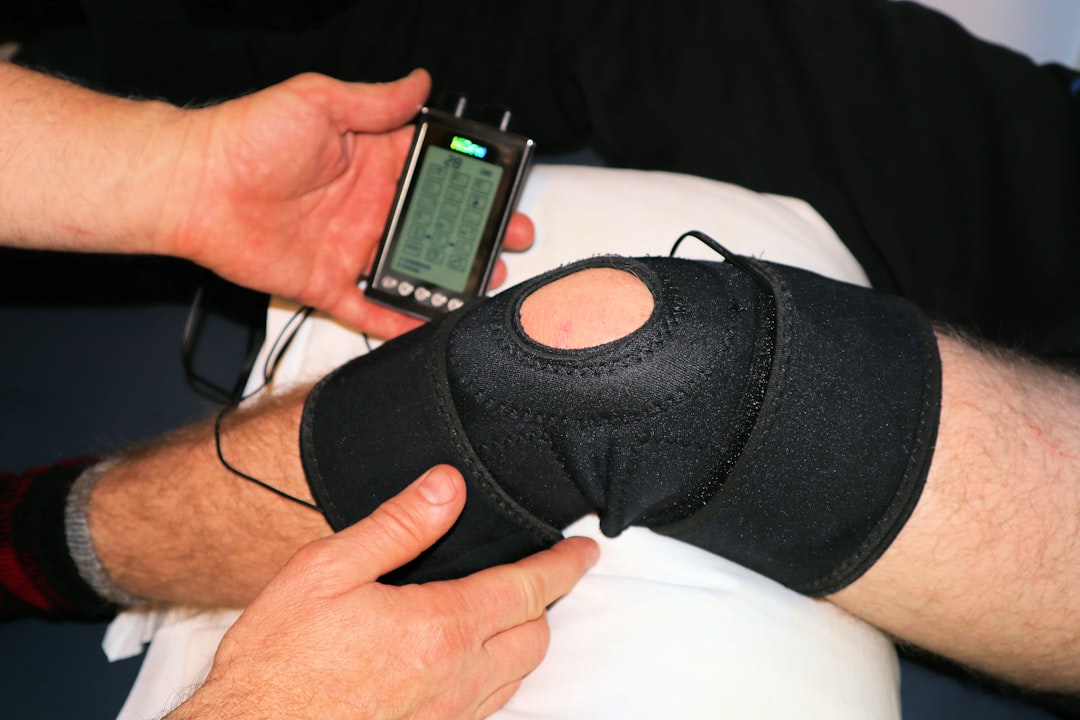
Photo by Terry Shultz P.T. on Unsplash
Demand Validation
r/Osteoarthritis is an active, high-intent community where 'which knee brace?' is one of the most repeated questions, with threads regularly hitting 20-60 comments. Buyers are often adult children purchasing for elderly parents, and many explicitly want a brace 'good enough to delay knee replacement.' Demand is year-round and durable (OA is chronic and growing with the aging/overweight population), but purchase intent is heavily medical and trust-gated rather than impulse.
At a Glance
Verdict
Worth watching
Top buyer complaint
Cheap sleeves don't help (or hurt), effective braces are unaffordable or unwearably bulky, and nothing in between fits the heavier, older OA body that needs it most.
Best opening angle
Lead with the specific underserved buyer: 'OA knee support that actually stays put on larger legs and won't press on your kneecap' — concrete, demonstrable, and ignored by mass-market sleeves.
Research depth
39 posts across 5 communities
Seller Insight
Who should sell this
Sellers with strong soft-goods/textile sourcing, the patience to nail anatomical sizing and QC, FSA/HSA listing capability, and credible health-and-wellness listing creative (fitting guides, honest indications).
Who should avoid this
Dropshippers slapping a logo on a generic compression sleeve, and anyone wanting to undercut prescription offloaders on price — both walk straight into high returns and review damage from buyers the product can't actually help.
Best positioning angle
Lead with the specific underserved buyer: 'OA knee support that actually stays put on larger legs and won't press on your kneecap' — concrete, demonstrable, and ignored by mass-market sleeves.
Competition note
Premium offloaders (Ossur, Breg, DonJoy) and the comfort leader (Bauerfeind GenuTrain OA) are entrenched; the affordable-unloader and heated-massager tiers are already saturated with Chinese-made Amazon brands. Open ground is anatomical fit for large thighs and a genuinely comfortable everyday OA support.
Pricing band
$25-80 (textile support); $120-250 (hinged offloader variant)
Margin potential
medium
Shipping complexity
low
Return risk
high
Seasonality
low
Pain Points — 5 identified
The $1,000 prescribed brace isn't covered, and buyers can't tell if cheaper braces work
Doctors routinely recommend premium unloader braces (Ossur Unloader One ~$1,129, Breg/DonJoy $1,000+) that insurance refuses to cover. Buyers then face a confusing wall of Amazon/eBay/Etsy/Alibaba options and have no way to judge whether a $50-300 brace gives comparable support. This trust gap is the single most repeated theme.
“my doctor recommended a big-brand knee brace that costs around $1000, but my insurance won't cover it ... something in the $200-300 range that still offers decent support. Why are medical-grade knee braces so expensive?”
“There are budget-friendly options on Amazon, eBay, Etsy, and Alibaba ... but then there are also premium branded knee braces that can be quite expensive. I am confused about whether the cheaper options can really provide the same level of support and relief.”
Unloader/offloader braces are too bulky and constricting for elderly daily wear
The functional braces that actually offload the joint are heavy, rigid, and uncomfortable — older buyers refuse to wear them for a simple daily walk. Buyers want soft, low-profile support that still relieves pain, a combination current products force them to choose between.
“I have sent her a few unloader/offloader brace options but she doesn't want to wear something 'heavyweight' that constricts her movements. Are there any soft material supporter or braces that are relatively comfortable to wear and can help alleviate her pain for a daily 30-45 min walk?”
“It doesn't stop the pain but it allows me more mobility and it helps me recover anytime I do anything. Not that cheap, but I would pay a lot more to give myself the activity back.”
Plain compression sleeves often make OA knees worse
The default cheap product — an elastic compression sleeve — frequently increases pain by pressing on the patella or compressing a swollen joint. Multiple users report sleeves causing 'immense pain' or a worse grinding sensation, which destroys trust in the whole category and drives returns.
“Compression sleeves caused me immense amounts of pain when doing squats ... If your knee is swelling it's a bad idea to compress it.”
“I found the sleeve type bandages don't really help, and some days they hurt. My theory is they put pressure on the patella a little bit, which increases the grinding sensation.”
Braces slide down — especially for heavier buyers, the core OA demographic
A brace that rolls down the thigh shifts off the kneecap and loses its support. This is acute for larger-thigh users, who are over-represented in OA (weight is a primary risk factor) yet under-served by standard sizing. Even premium brands publish 'how to stop your brace slipping' guides, confirming it is an unsolved, universal frustration.
“Ever pulled on a knee brace only to watch it roll down your thigh mid-walk? ... If you've got larger thighs, standard braces simply aren't built with your body in mind -- they slip, bunch, and dig into your skin.”
“A lot of knee braces constantly slip and slide down your calf, which means you are forever adjusting your brace. A knee brace that slides can't help your knee heal properly.”
Standard braces don't help with the hardest movements: stairs and sit-to-stand
Even users who tolerate a brace report it does little for stairs, getting up from a chair, or prolonged standing — the exact moments OA pain peaks. This is pushing buyers toward emerging assistive/powered devices, signaling the passive-brace ceiling.
“Regular braces help a bit, but stairs, getting up from a chair, and longer periods of walking or standing are still things I struggle with most ... It looks more assistive than a standard brace.”
“The stiffness and pain somewhat fades when I put my Patella stabilizer brace on. Tho after long I'll stand up and there's a pain in my inner knee area regardless if brace on or not.”
Seller Opportunities
Anti-slip, anatomically-sized OA support for larger thighs
highA soft hinged or wrap support engineered with a wide silicone grip band and true plus-size circumference grading (not just longer). Directly targets the dominant heavier OA buyer that mass-market sleeves ignore, with no mold required and a clear, demonstrable benefit ('doesn't roll down'). Differentiation is fit and grip, not novel mechanism.
Lightweight low-profile everyday OA support (sub-premium comfort tier)
mediumPosition between the failing cheap sleeve and the $195 Bauerfeind GenuTrain OA: a breathable knit support with a patella opening/cutout to avoid kneecap pressure and a light medial buttress, designed explicitly for elderly all-day comfort and a 30-45 min walk. Win on comfort, breathability, and easy don/doff for arthritic hands, not on offloading force.
Affordable hinged offloader positioned honestly for single-compartment OA
mediumCompete in the $120-250 band already occupied by Brace Align and Orthomen, but win on fit/comfort, clearer fitting guidance, and FSA/HSA eligibility rather than pretending to match a $1,000 custom brace. Must be marketed only for unicompartmental (medial OR lateral) OA — its actual indication — to avoid the returns that kill bone-on-bone buyers' trust.
Why hasn't this been done?
Buyer pain is real, but that doesn't make every opportunity viable. For each opportunity above, here's the supply-chain or business-model reason it isn't already on the shelf.
Anti-slip, anatomically-sized OA support for larger thighs
high confidenceWhy not done yet
It is starting to be done — Sleeve Stars, Fivali ('best knee brace for big thighs'), and KARM ('best for people with more weight') are already staking out this exact angle, and even Bauerfeind publishes slip-prevention guidance. The opening is that the segment is fragmented with no trusted leader and most entrants are generic dropship sleeves, not OA-specific anatomical designs.
Cost / supply-chain impact
Textile-only product, no tooling: adding a wider silicone-dot grip band and extra circumference size runs adds roughly 10-20% to BOM versus a plain sleeve and increases SKU count (more sizes = inventory complexity). Lead time impact is minimal; this is a sourcing/QC and grading problem, not a mold problem.
Business-model conflict
None identified. Plus-size grading and grip bands are additive and support a premium price; the main operational cost is carrying more size SKUs.
Lightweight low-profile everyday OA support (sub-premium comfort tier)
high confidenceWhy not done yet
The premium comfort slot is firmly held by Bauerfeind's GenuTrain OA/A3 (lightweight 3D AirKnit, ~$195+), which OA users actively praise and say they'd 'pay a lot more' for. The reason a cheaper clone is hard is that Bauerfeind's value is in proprietary medical knit, fit, and brand trust — a generic knit copy reads as 'just another sleeve' and runs straight into the documented problem that plain compression can worsen OA pain.
Cost / supply-chain impact
A medical-grade circular-knit with graduated zones and a molded patella ring costs materially more than a flat-cut sleeve — figure +30-50% BOM over a basic sleeve, requiring a circular knitting supplier rather than a cut-and-sew shop. Still no injection mold, but the textile sourcing bar is much higher than buyers assume.
Business-model conflict
Sits in a squeezed middle: too expensive to win on price against $15 sleeves, not credentialed enough to command Bauerfeind pricing. Margin depends on convincing buyers the knit quality is real, which is hard to prove in a listing photo.
Affordable hinged offloader positioned honestly for single-compartment OA
high confidenceWhy not done yet
The affordable-unloader niche is already populated: Brace Align (FSA/HSA-eligible, varus/valgus correction), Orthomen (4.3 stars on Walmart), and Spring Loaded all sell well below the $1,000 prescription tier. Worse, the clinical case is shaky — peer-reviewed reviews conclude evidence for bracing is 'still inconclusive,' and unloaders only work for unicompartmental OA, so bone-on-bone buyers (a large, vocal segment) are structurally unsatisfiable and drive returns and angry reviews.
Cost / supply-chain impact
A hinged offloader with aluminum struts, a polycentric hinge, and an adjustable load strap is a real assembly: tooling for hinge/frame components plus assembly pushes BOM well above textile supports, and any rigid-frame variant may need injection molds in the low five figures. Competing on price here compresses margin against entrenched players.
Business-model conflict
Honest single-compartment positioning shrinks the addressable buyer pool (excludes bone-on-bone and tricompartmental OA), and the high return risk from mis-self-diagnosis erodes the thin margin a budget offloader carries.
Manufacturing Profile
Process
textileMaterial
Differentiation
structureNo mold change needed
Requires mold change
Seller Verdict
Demand is real, chronic, and year-round, but this is a trust- and fit-gated medical-adjacent category, not an easy impulse win — and the obvious plays (cheap unloader, heated brace) are already saturated. If you pursue it, ignore bone-on-bone buyers (a brace can't satisfy them) and own one sharp niche instead: anti-slip OA support sized for larger thighs is the cleanest opportunity (no mold, demonstrable benefit, fragmented competition). Budget for high return rates from mis-self-diagnosis, write brutally honest indication and sizing guidance, and pursue FSA/HSA eligibility as a conversion lever.
Related Reports
Portable Medical / Insulin Cooler
A validated, fast-growing category (driven by GLP-1 weight-loss drugs on top of the established insulin base), but the obvious 'powered mini-fridge' idea is already commoditized — the remaining edge is in GLP-1-specific sizing, capacity, and reducing the buyer's 'is my medication ruined?' anxiety.
Health & BeautyNeck Massager
Massive validated demand from desk workers and chronic pain sufferers, but the U-shape TENS/EMS category is saturated and dominated by SKG — the real opening is the $30-60 shiatsu kneading pillow with provable durability and longer-than-temporary relief.
Health & BeautyAdult Incontinence Underwear
Large, underserved market plagued by stigmatizing medical aesthetics and poor fit for active users — the real opportunity is in lifestyle-forward, discreet products designed for specific demographics (men, athletes, postpartum) rather than competing head-on with Depend/TENA on absorbency.
Frequently Asked Questions
Is Medical Knee Brace (Osteoarthritis Support) worth selling in 2026?
A large, chronic, high-intent OA audience is poorly served between cheap sleeves that hurt and $1,000 prescribed braces — but the obvious responses are already crowded, so the win is a sharp fit/comfort niche rather than another generic offloader.
What are the biggest problems buyers have with Medical Knee Brace (Osteoarthritis Support)?
The $1,000 prescribed brace isn't covered, and buyers can't tell if cheaper braces work; Unloader/offloader braces are too bulky and constricting for elderly daily wear; Plain compression sleeves often make OA knees worse; Braces slide down — especially for heavier buyers, the core OA demographic; Standard braces don't help with the hardest movements: stairs and sit-to-stand.
What is the best market opportunity for Medical Knee Brace (Osteoarthritis Support) sellers?
Lead with the specific underserved buyer: 'OA knee support that actually stays put on larger legs and won't press on your kneecap' — concrete, demonstrable, and ignored by mass-market sleeves.
What do Reddit users say about Medical Knee Brace (Osteoarthritis Support)?
r/Osteoarthritis is an active, high-intent community where 'which knee brace?' is one of the most repeated questions, with threads regularly hitting 20-60 comments. Buyers are often adult children purchasing for elderly parents, and many explicitly want a brace 'good enough to delay knee replacement.' Demand is year-round and durable (OA is chronic and growing with the aging/overweight population), but purchase intent is heavily medical and trust-gated rather than impulse.
Research coverage
Communities
Search terms