Is Heated Ski Socks & Heated Insoles / Footbeds Worth Selling?
Based on 80+ Reddit posts across 7 communities: Heated Ski Socks & Heated Insoles / Footbeds scores 8/10 — strong opportunity. Cold-feet skiers and Raynaud's sufferers are forced to pick between $400+ premium kits and bulky $40 Amazon socks — the thin, mid-price, app-controlled tier is the real opening.
Opportunity Score
Cold-feet skiers and Raynaud's sufferers are forced to pick between $400+ premium kits and bulky $40 Amazon socks — the thin, mid-price, app-controlled tier is the real opening.
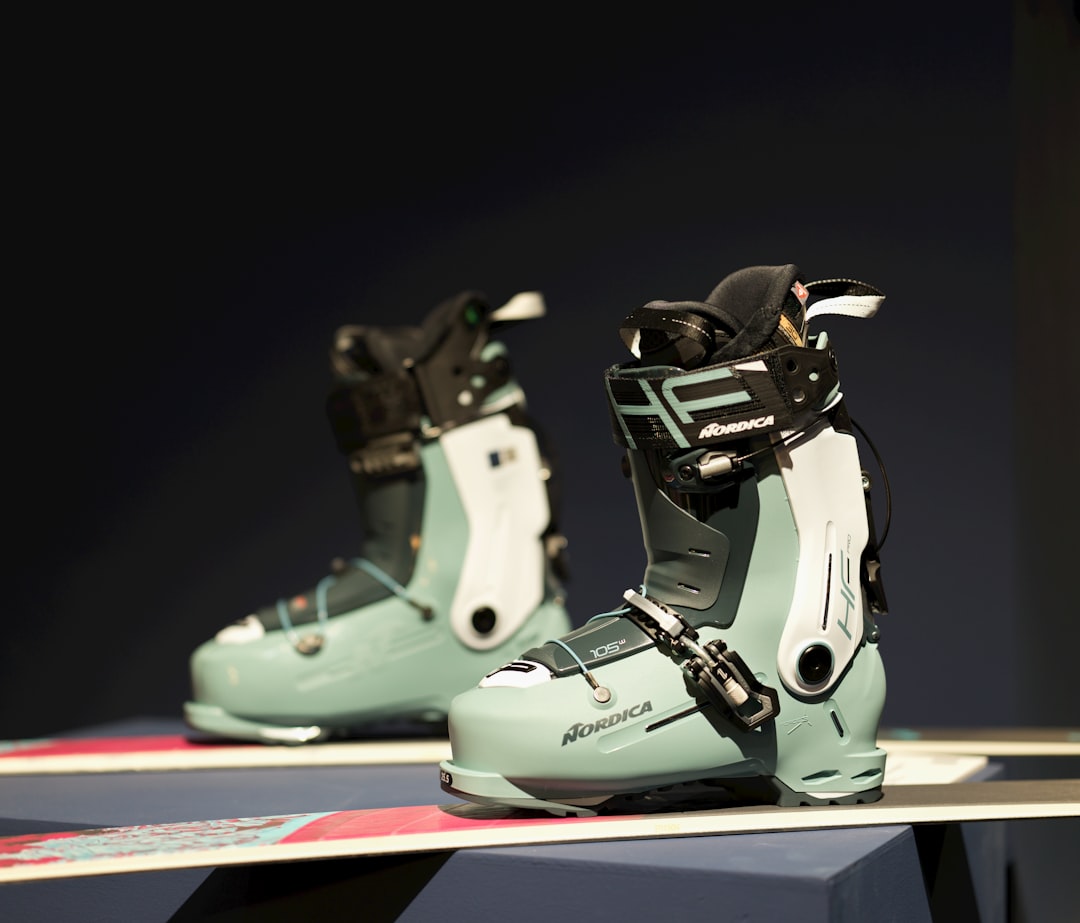
Photo by Declan Sun on Unsplash
Demand Validation
Heated socks and insoles are an evergreen topic across r/skiing, r/Skigear, r/snowboarding, r/Raynauds and r/IceFishing — single threads routinely pull 30–90 comments with named brand discussion (Lenz, Hotronic, Therm-ic, Mountain Lab, Ororo, Savior Heat). Buyers arrive with high purchase intent (Raynaud's diagnosis, 30+ days/season skiers, lifties working outdoors all winter) and the question is almost always which brand, not whether to buy.
At a Glance
Verdict
Strong opportunity
Top buyer complaint
Existing thin heated socks cost $400–500 and require bootfitter install; cheap Amazon alternatives are too thick for properly fit ski boots and have unreliable battery life.
Best opening angle
Lead with race-boot compatibility and Raynaud's-friendly per-foot control, not raw watts. Anchor at $89–129 as 'real-fit thin heated sock' between Amazon bulk and Lenz premium.
Research depth
80 posts across 7 communities
Seller Insight
Who should sell this
Sellers with battery + textile assembly experience, ski-shop or specialty channel access, and willingness to invest in UL/CE certification rather than race the Amazon bottom.
Who should avoid this
Generic Amazon dropshippers — the cheap end is already saturated with 10+ near-identical brands competing only on price, and battery quality issues will surface in reviews fast.
Best positioning angle
Lead with race-boot compatibility and Raynaud's-friendly per-foot control, not raw watts. Anchor at $89–129 as 'real-fit thin heated sock' between Amazon bulk and Lenz premium.
Competition note
Premium tier (Lenz, Hotronic, Therm-ic) is mature and stable; cheap tier (Savior Heat, Wasoto, Ororo, Snow Deer, Dr. Warm) is crowded but undifferentiated on thinness or app control. The middle band is the only structurally defensible slot.
Pricing band
$89–149
Margin potential
medium
Shipping complexity
medium
Return risk
medium
Seasonality
high
Pain Points — 6 identified
Cheap Amazon heated socks are too thick to fit in a properly-sized ski boot
Sub-$80 heated socks use bulky wire routing and thick padding that work for boots/cycling but kill a custom-fit ski boot. Buyers are forced into the $400+ Lenz / Hotronic tier just to get a thin sock.
“I like skiing with extremely thin socks I ski with the smartwool super thin ones right now and I'm just curious if any of these heated ski socks are actually as thin as that kind of sock”
“For socks especially you want to buy brand name ones specifically designed for skiing as the generic ones are often far too thick to fit in a ski boot properly.”
“Heated socks are a great option for skiers who aren't picky about their ski socks. Boot heaters are best for skiers who like to ski in ultra-thin ski socks.”
Battery pack on the cuff interferes with the boot — bulky, presses into calf, snags on pants
Snap-on battery packs sit on top of the shin and routinely conflict with tall ski boot cuffs, especially women's and race boots. The cord routing complaint is universal across price tiers.
“I am not sure if there are a good pair of heated socks that don't have too big of a battery or a battery that doesn't get in the way of the boot? Or the cord that isnt pushing against my calf.”
“watch their claims on battery life. I'm constantly aware of having to balance 4hrs on high, vs 8hrs on low. They're great unless their battery runs out”
Premium heated socks/insoles routinely $400–500, locking out price-sensitive buyers
Skimag's 2025 round-up has Therm-ic at $460, Lenz at $450, Hotronic at $444 — none of the 'best' picks are under $440. Reddit users explicitly call the premium pricing 'insane' and seek cheaper alternatives.
“Most of the heated socks options are $500CAD. This seems a bit insane to me today when battery run gizmos are better and cheaper than ever. That said, has anyone tried the cheap options available on Amazon? They are about 10% the price.”
“Does putting boots on straight out of a heated boot bag compare to heated $400 thermic/hotronic insoles?”
Heat output underperforms marketing — even premium socks feel 'barely above room temperature' at max
Buyers paying $300–500 expect dramatic warmth and instead get a subtle 'less cold' effect. Whether this is correct physiology or insufficient wattage, expectation mismatch is severe and reviews never set the right anchor.
“Even at max settings they provide the tiniest feeling of warmth. Was not enough to make a bit of difference to the comfort level of my toes. Sitting here today testing them inside, and on max setting I would say they warm up to barely above room temperature.”
“At first I thought they weren't working as I was expecting to feel my hands warmed all over (like with the hand warmers) but... after a while I realized that while my hands don't feel 'wrapped in warmth' in them, they don't feel as cold, and my fingers — to my happy surprise — were NOT getting the Raynauds.”
Heating amplifies sweat — wet liner becomes a cold day's second crisis
Adding heat to a sealed plastic ski boot accelerates perspiration. Many users actively avoid boot heaters because they make the sweat-cold cycle worse, especially for lifties and lift workers who sweat moving snow.
“Im pretty much locked into removing the liners after every ski day and putting them over the heating vent... I don't really want to go to boot heaters to fight this since that just makes the sweat worse.”
“Reason I wait a lift ride or so to turn them on is I find if I turn them on right away, like in the lodge, my feet sweat a lot which just makes me colder in the long run.”
“I sweat a lot moving snow, so damp feet is something that will always be there... I got these insoles last year and they also helped a little. But I'm looking for the best of the best. Warm and do good with moisture.”
Asymmetric cold feet — one foot worse than the other, but products only ship as synced pairs
Circulatory issues are rarely symmetric. Both Lenz and Hotronic require either two separate batteries (no sync) or one remote that controls both feet identically. No product addresses 'left foot needs 70%, right foot needs 30%'.
“I run cold consistently on full days, left foot worse than right, been through four different sock combinations over two seasons without finding a consistent solution. A physio suggested the issue was circulatory rather than insulation.”
“Usually my 3rd through pinky toe turn white and have the most issue. Thin socks don't work although they ski better, upgrading to Intuition liners didn't change anything... Everyone says keep your core warm, but that doesn't work, it just makes me sweat and doesn't change how my toes react.”
Seller Opportunities
Thin merino-blend heated sock priced between cheap Amazon and Lenz ($80–120)
highUse thin Kevlar-jacketed heating wire and 40–50% merino blend to match Lenz 6.1 thinness, but target the $80–120 band where current Amazon options are too thick for ski boots and premium options demand $400+ for the full kit. Lead with race-boot compatibility, not heat output, since heat output is universally underwhelming anyway.
Bluetooth app with independent per-foot temperature control
mediumAddress the asymmetric-circulation segment (Raynaud's, post-injury, diabetics) by allowing each foot to run a different temperature/duration via phone app. Hotronic just launched basic Bluetooth at premium pricing; no sub-$200 option offers genuine independent control. Position medical/asymmetric, not 'tech feature'.
Battery + drying-dock combo: same Li-ion pack powers an overnight liner dryer
mediumSweat is the universal second-order problem and serious skiers already buy $30–40 boot dryers separately. Ship the heated insole with a passive heating-element drying tube that plugs into the same battery overnight — turns one purchase into a heating + drying system.
Kids and youth-sized heated socks/insoles with parent-controlled app
mediumReddit explicitly calls out 'wife and kids always complain of cold feet' but no major brand offers heated socks below adult sizes. Parent-controlled app (limits max temperature, monitors battery) addresses the safety angle. Requires UL/CE certification work but creates a near-uncontested sub-niche.
Why hasn't this been done?
Buyer pain is real, but that doesn't make every opportunity viable. For each opportunity above, here's the supply-chain or business-model reason it isn't already on the shelf.
Thin merino-blend heated sock priced between cheap Amazon and Lenz ($80–120)
high confidenceWhy not done yet
Lenz already proves the engineering (6.1 toe cap merino compression at €119) — the gap is that no Chinese-OEM brand has yet matched the thinness while staying under $120. Cheap brands (Savior Heat, Wasoto, Ororo, Snow Deer, Dr. Warm) all use thicker low-cost heating wire that adds bulk. The unsolved problem is sourcing thin enough wire while keeping landed cost reasonable.
Cost / supply-chain impact
BOM delta vs typical Amazon cheap sock: +$8–12 for thinner Kevlar-jacketed heating wire and merino blend (cheap socks are 80% polyester acrylic; you need 40%+ merino). Two-battery kit landed cost ~$28–35, target retail $89–119. Mold cost zero (textile + off-the-shelf battery housing).
Business-model conflict
Margins are squeezed from both sides: cheap Amazon competitors will undercut on price the moment they see traction, and Lenz protects the premium end via boot-shop distribution. Survival depends on staying out of Amazon's race to the bottom — ski-shop direct or DTC with size-fit education.
Bluetooth app with independent per-foot temperature control
medium confidenceWhy not done yet
Premium brands only just launched single-channel Bluetooth (Hotronic), and they have no incentive to introduce per-foot independence at lower price points — it would cannibalize their bootfitter installation revenue. Cheap brands (e.g. Wasoto with app) treat the app as a marketing checkbox, syncing both feet identically. The actual asymmetric-cold buyer doesn't know to ask for this feature by name, so demand is latent.
Cost / supply-chain impact
BOM delta: +$3–5 per battery pair for a basic BLE chip (e.g. Nordic nRF52 or ESP32-C3); firmware is the real work — needs separate channel per pack. Existing dual-battery designs (one per sock) already provide the hardware path. App development one-shot ~$25–40k for iOS+Android. Mold cost incremental on battery housing only.
Business-model conflict
Latent demand means heavy marketing/education spend. Mainstream Amazon listings optimize on watt-hours and heat levels; 'independent per-foot' won't fit the standard listing pattern. Best fit is medical-channel positioning (Raynaud's communities, post-frostbite recovery) where the buyer's pain is explicit.
Battery + drying-dock combo: same Li-ion pack powers an overnight liner dryer
medium confidenceWhy not done yet
Boot dryers ($30–40) and heated insoles ($150–400) are sold by entirely different categories of brand (Peet Dryer vs Hotronic) with no overlap. Combining them adds engineering complexity (dual-mode controller, thermal cutoff on a passive element) and creates a 2-in-1 product that often disappoints at both jobs. No evidence anyone has tried this exact combination at scale.
Cost / supply-chain impact
BOM delta: +$5–8 for a flexible PTC heating tube and dual-mode controller. Mold: ~$3–6k for the drying tube + dock injection. Risk: low-power overnight drying competes against $40 PEET tower dryers that move air actively — passive heat alone may not match performance, leading to mixed reviews.
Business-model conflict
Bundle pricing collapses the perceived value of both components; buyers see $150 for 'insole + dryer' and assume the dryer is junk. Better positioned as 'heated insole with bonus overnight drying mode' than as a dual product.
Kids and youth-sized heated socks/insoles with parent-controlled app
medium confidenceWhy not done yet
No major brand has built a child-sized SKU. The barrier is regulatory: lithium-ion battery in direct contact with kids' skin triggers UL/CE certification scrutiny (CPSC, EU toy safety). Most established brands won't take on the liability for a small SKU; cheap Amazon brands skip certification entirely and would not pass a kids-product audit. The market is uncontested because the entry cost is paperwork-heavy, not hardware-heavy.
Cost / supply-chain impact
BOM delta: ~+$2–5 per pair to use UL-certified Li-ion cells vs cheap unmarked cells. UL 60335-2-17 (heated bedding/clothing) certification ~$15–30k one-shot. CPSC compliance another ~$5–10k. Adds 4–6 months to launch.
Business-model conflict
Kids' ski gear is a low-volume seasonal category; one bad incident triggers media and recall. Many sellers will judge the upside not worth the regulatory drag. Best fit is a serious brand willing to certify properly and price at parity with adult ($79–99) rather than discount.
Manufacturing Profile
Process
textileMaterial
Differentiation
materialNo mold change needed
Requires mold change
Seller Verdict
Pursue this — but only if you can solve the wire-thinness + battery-reliability problem at a $30–40 landed cost and skip the Amazon bulk-sock race. The asymmetric/Raynaud's positioning with Bluetooth app control is the most defensible angle; commodity 'cheap heated socks' is a dead end already populated by 10+ brands. Strong seasonality (Nov–Feb) means inventory planning is the operational risk, not demand discovery.
Related Reports
Ice Fishing Shelter Skirt & Wind/Cold Sealing Accessories
Premium ice shelters (Eskimo, Clam, Otter, Bass Pro) ship without proper wind sealing, anchor counts that match their own guy-lines, or floor liners — and active ice fishers buy from China factories themselves because retail prices are 'killing them'. The accessory ecosystem is wide open.
Sports & OutdoorsUnder-Desk Treadmill (Walking Pad)
Massive WFH-driven demand is colliding with an industry-wide reputation for motor burnout, belt drift, creaking decks, and a buyer experience drowning in identical-looking Chinese rebrands — a seller who can prove durability and pick one clear underserved niche can win.
Sports & OutdoorsHeated Ski Boot Warmer
Cold feet is a near-universal ski pain point with strong, recurring buyer intent — but incumbent solutions (Hotronic, Therm-ic, Lenz) are expensive, install-heavy, and have battery/cord ergonomics issues that leave clear room for a value-priced, low-friction alternative.
Frequently Asked Questions
Is Heated Ski Socks & Heated Insoles / Footbeds worth selling in 2026?
Cold-feet skiers and Raynaud's sufferers are forced to pick between $400+ premium kits and bulky $40 Amazon socks — the thin, mid-price, app-controlled tier is the real opening.
What are the biggest problems buyers have with Heated Ski Socks & Heated Insoles / Footbeds?
Cheap Amazon heated socks are too thick to fit in a properly-sized ski boot; Battery pack on the cuff interferes with the boot — bulky, presses into calf, snags on pants; Premium heated socks/insoles routinely $400–500, locking out price-sensitive buyers; Heat output underperforms marketing — even premium socks feel 'barely above room temperature' at max; Heating amplifies sweat — wet liner becomes a cold day's second crisis; Asymmetric cold feet — one foot worse than the other, but products only ship as synced pairs.
What is the best market opportunity for Heated Ski Socks & Heated Insoles / Footbeds sellers?
Lead with race-boot compatibility and Raynaud's-friendly per-foot control, not raw watts. Anchor at $89–129 as 'real-fit thin heated sock' between Amazon bulk and Lenz premium.
What do Reddit users say about Heated Ski Socks & Heated Insoles / Footbeds?
Heated socks and insoles are an evergreen topic across r/skiing, r/Skigear, r/snowboarding, r/Raynauds and r/IceFishing — single threads routinely pull 30–90 comments with named brand discussion (Lenz, Hotronic, Therm-ic, Mountain Lab, Ororo, Savior Heat). Buyers arrive with high purchase intent (Raynaud's diagnosis, 30+ days/season skiers, lifties working outdoors all winter) and the question is almost always which brand, not whether to buy.
Research coverage
Communities
Search terms