Is Bone-Conduction Wireless Earbuds Worth Selling?
Based on 105+ Reddit posts across 8 communities: Bone-Conduction Wireless Earbuds scores 7/10 — worth watching. The product is worth considering only with a precise wedge. Generic open-ear/bone-conduction listings are crowded, but Reddit shows recurring unmet needs around fit, swim audiobooks, cycling wind, and reliability below Shokz pricing.
Opportunity Score
The product is worth considering only with a precise wedge. Generic open-ear/bone-conduction listings are crowded, but Reddit shows recurring unmet needs around fit, swim audiobooks, cycling wind, and reliability below Shokz pricing.
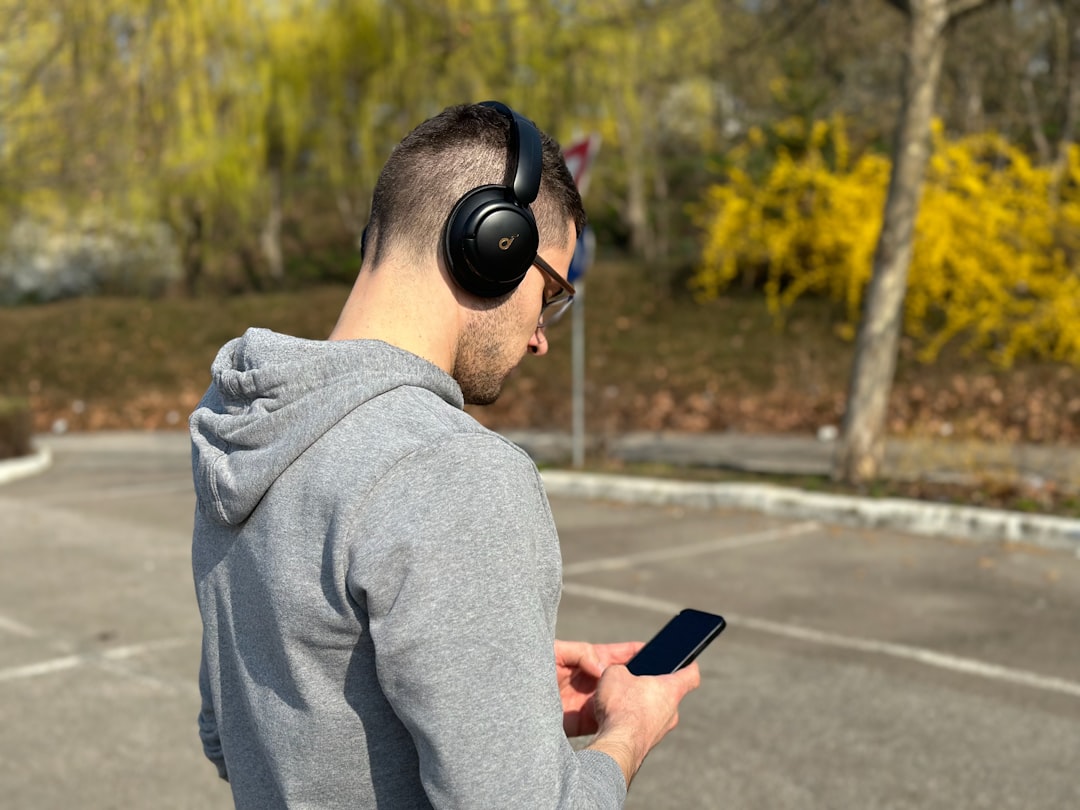
Photo by Ana Achim on Unsplash
Demand Validation
Reddit discussion is active across r/HeadphoneAdvice, r/running, r/Swimming, r/cycling, r/headphones, r/Frugal, and r/BuyItForLife. Buyer intent is clear: users are asking what to buy after earbuds hurt their ears, fall out, block traffic awareness, fail in water, or cannot handle podcasts. The category has a trusted incumbent in Shokz, so demand is real but differentiation must be specific and credible.
At a Glance
Verdict
Worth watching
Top buyer complaint
Buyers like open-ear safety but current products fail at use-case details: volume in wind, audiobook controls in water, fit/contact pressure, and trust in cheaper waterproof batteries.
Best opening angle
Pick one use case and own it: 'swim podcasts with real controls,' 'cycling podcasts without blocking traffic,' or 'fits helmets, glasses, and earplugs.' Avoid vague 'better sound' claims.
Research depth
105 posts across 8 communities
Seller Insight
Who should sell this
Sellers with electronics QA capability, battery/waterproof testing experience, and access to factories that can modify frames, buttons, and firmware rather than only relabel existing shells.
Who should avoid this
Dropship sellers buying catalog bone-conduction SKUs with no control over battery cell, waterproofing, fit geometry, or firmware. This category punishes weak QA through returns and warranty claims.
Best positioning angle
Pick one use case and own it: 'swim podcasts with real controls,' 'cycling podcasts without blocking traffic,' or 'fits helmets, glasses, and earplugs.' Avoid vague 'better sound' claims.
Competition note
Shokz dominates trust and premium mindshare. The opportunity is not to out-brand Shokz, but to solve a narrower job better than a general-purpose Shokz model and cheaper no-name alternatives.
Pricing band
$69-129 for mid-price; $139-179 for swim/control premium
Margin potential
medium
Shipping complexity
medium
Return risk
high
Seasonality
medium
Pain Points — 5 identified
Safety and ear-health buyers accept the concept but still dislike the audio tradeoff
The core purchase reason is strong: users want open ears for traffic awareness, ear-canal irritation, heavy sweating, or hygiene. But the same threads repeatedly warn that bass and music quality lag far behind even cheap earbuds.
“The sound quality is not really the main selling point with Aftershokz.”
“You don't buy aftershokz for sound quality. Buy B&O or Sennheiser for that. You buy AS for safety.”
“I deal with frequent ear infections... bone conduction (like Shokz): not sure how good these are for music/podcast quality.”
Wind and traffic drown out podcasts and audiobooks
Cyclists repeatedly say bone-conduction headphones are good enough for quiet rides but become hard to hear in headwind, descents, and busy roads. Spoken-word use is more sensitive than music because missing a sentence ruins the experience.
“The Aeropex where borderline loud enough, especially when going >25 kph and the new Open Run are even less loud.”
“Sometimes they aren't loud enough if you're going fast, but definitely worth it. I listen to podcasts all the time on them.”
“On the windiest of days and if you're in an urban environment it can be hard to hear but they work for 95% of my running and cycling.”
One-size wraparound frames fail large heads, narrow heads, glasses, helmets, and earplugs
Fit is not cosmetic in this category; if the transducer does not press in the right place, volume drops and vibration feels wrong. Users also need compatibility with helmets, cycling glasses, welding headgear, and foam earplugs.
“The audio-producing pads doesn't press against the side of my head, instead floating there.”
“My only issue with them is the band that goes across the back of my head. They limit what headgear I can wear.”
“I am afraid to loose them. I would prefer something that is connected with a strap or similar.”
Swimming models lack audiobook-grade controls
Swimmers are not only asking for music; they want podcasts and audiobooks with resume, rewind, fast-forward, folder traversal, shuffle, and reliable physical controls. Current MP3 modes feel like old commodity players rather than modern audio devices.
“The audio controls for podcasts are nonexistent... I would love to have headphones that can skip forward or back 10 seconds.”
“Shokz OpenSwim Pro 2... cannot fast-forward or rewind while listening to a track in mp3 mode.”
“I'd like some shuffle or folder traversal options and lossless audio support.”
Budget alternatives are distrusted on battery life and waterproofing
The market is split between trusted Shokz pricing and a sea of cheaper lookalikes. Reddit buyers complain that budget models die quickly, stop holding charge, or fail after pool use, while frugal buyers want an alternative but distrust reviews.
“I owned a pair of Raycon bone conduction earbuds for about 3 months before they started to die after a few hours.”
“After a couple of months of use in the water 2/3 times a week, they started to play up.”
“Tried my friend's name brand Aftershokz, pretty great. Pretty high dollar. But all the cheaper ones have terrible reviews.”
Seller Opportunities
Adjustable-contact fit frame with two band sizes
mediumBuild around contact reliability, not just headband length: two frame sizes, a small inward-pressure adjustment range, and clear fit guidance for large heads, narrow heads, glasses, and helmets. This targets the exact failure mode where pads float off the cheekbone or clamp uncomfortably.
Swim/audiobook firmware with physical controls
mediumDo not promise underwater Bluetooth. Position as the best offline podcast/audiobook swim headset: 32GB storage, bookmark resume, 10/30-second skip, folder navigation, shuffle, large glove/wet-hand buttons, and a companion transfer app.
Cycling spoken-word wind kit
highBundle bone-conduction headphones with low-profile helmet-strap wind deflectors, a podcast EQ preset, one-button pause, and clear speed/use guidance. The value proposition is 'hear podcasts and traffic on normal rides,' not high-fidelity music in a headwind.
Durability-led mid-price waterproof SKU
mediumCompete between no-name $40-60 listings and Shokz by proving reliability: better battery cell, sealed magnetic charging, corrosion-resistant contacts, real IP test language, and a 24-month replacement policy. The listing should sell trust, not specs alone.
Why hasn't this been done?
Buyer pain is real, but that doesn't make every opportunity viable. For each opportunity above, here's the supply-chain or business-model reason it isn't already on the shelf.
Adjustable-contact fit frame with two band sizes
high confidenceWhy not done yet
Fit is tied directly to acoustic output and vibration comfort; a loose frame loses volume while an aggressive clamp causes fatigue. Incumbents offer sizing tools and fit guides rather than broad mechanical adjustment because every adjustable joint adds tolerance, waterproofing, and warranty risk.
Cost / supply-chain impact
Expect a new frame mold and spring-wire forming fixture in the ~$20-50k range. Two sizes plus pressure adjustment add roughly 5-12% BOM and more SKU inventory; waterproof validation must be repeated for each frame variant.
Business-model conflict
A fit-first SKU narrows the buyer segment and may increase returns if the fit promise is not measured well. It is stronger for a specialist brand than for a generic Amazon seller chasing one-size volume.
Swim/audiobook firmware with physical controls
high confidenceWhy not done yet
The obvious user wish, streaming in the pool, is mostly blocked by physics: 2.4GHz Bluetooth is absorbed by water. Incumbents such as Shokz already added MP3 storage, but their control model is still music-track oriented; audiobook UX is a niche firmware and app problem, not a radio breakthrough.
Cost / supply-chain impact
Firmware/app work is the main cost: roughly $15-40k NRE for bookmarking, folder sync, and QA across file formats. Larger flash, a higher-spec MCU, and sealed tactile buttons add about $0.80-2.00 BOM; better button caps need extra waterproof cycle testing.
Business-model conflict
The swim-audiobook buyer is smaller than the general running/cycling buyer, and support burden rises because file transfer, folders, and codecs create more customer-service tickets. It works best as a premium swim SKU, not the default model.
Cycling spoken-word wind kit
high confidenceWhy not done yet
Wind noise is not a headphone-only problem; it is turbulent air at the rider's ear. Cat-Ears-style wind reducers already exist, which means the product opportunity is bundling and positioning, not inventing a new physics solution.
Cost / supply-chain impact
A textile/faux-fur helmet-strap wind reducer adds about $0.50-1.20 BOM and 5-8% more package volume. Integrating hard deflectors into the headphone frame would require new small molds (~$8-15k) and may interfere with helmets or sunglasses.
Business-model conflict
Bundling an accessory can make the listing look less sleek than a premium Shokz page. It is still commercially plausible because the accessory is cheap and targets a concrete use case: spoken-word cycling.
Durability-led mid-price waterproof SKU
medium confidenceWhy not done yet
Cheap brands win on low sticker price, while Shokz wins on trust and warranty. Real waterproof durability is not just an IP badge; swim headphones face chlorine, saltwater, sweat, sealed charging, and battery aging, all of which require tighter QA than commodity Bluetooth earbuds.
Cost / supply-chain impact
A higher-grade cell, conformal coating, magnetic charging contacts with better plating, and batch IP testing add roughly $1.50-3.50 BOM plus a 3-5% warranty reserve. That pushes a credible SKU toward $79-119 retail rather than the $39-59 commodity tier.
Business-model conflict
A 24-month replacement policy improves trust but can erase margin if failure rates are not controlled below ~3-4%. If the retail price gets too close to Shokz sale pricing, buyers may choose the incumbent unless the use-case positioning is sharper.
Manufacturing Profile
Process
pcb assemblyMaterial
Differentiation
structureNo mold change needed
Requires mold change
Seller Verdict
Pursue this only with a focused use-case SKU and real factory control. The best opportunities are swim audiobook controls, cycling spoken-word/wind bundling, and fit systems for helmets/glasses/earplugs; a generic Shokz alternative is too exposed to incumbent trust and Amazon price pressure. Electronics QA is the gating factor: if you cannot validate battery aging, waterproofing, and fit tolerance, skip it.
Related Reports
Noise-Canceling Headphones
A massive, complaint-rich market where no brand has fully solved the trifecta of long-wear comfort, multi-year durability, and clean materials — creating room for differentiated entrants targeting power users, glasses wearers, and neurodivergent buyers.
ElectronicsMonitor Light Bar
Strong Reddit demand with clear segmentation: cheap options create glare and fail early, while BenQ dominates the premium tier at $80–$130, leaving a credible gap for a mid-tier ($40–$70) product with no-glare optics, curved-monitor compatibility, and motion-sensor auto-dimming.
ElectronicsMagSafe Wallet
Nearly every brand fails on magnet strength and card capacity — a seller who nails both has a clear path to $30–60 price point.
Frequently Asked Questions
Is Bone-Conduction Wireless Earbuds worth selling in 2026?
The product is worth considering only with a precise wedge. Generic open-ear/bone-conduction listings are crowded, but Reddit shows recurring unmet needs around fit, swim audiobooks, cycling wind, and reliability below Shokz pricing.
What are the biggest problems buyers have with Bone-Conduction Wireless Earbuds?
Safety and ear-health buyers accept the concept but still dislike the audio tradeoff; Wind and traffic drown out podcasts and audiobooks; One-size wraparound frames fail large heads, narrow heads, glasses, helmets, and earplugs; Swimming models lack audiobook-grade controls; Budget alternatives are distrusted on battery life and waterproofing.
What is the best market opportunity for Bone-Conduction Wireless Earbuds sellers?
Pick one use case and own it: 'swim podcasts with real controls,' 'cycling podcasts without blocking traffic,' or 'fits helmets, glasses, and earplugs.' Avoid vague 'better sound' claims.
What do Reddit users say about Bone-Conduction Wireless Earbuds?
Reddit discussion is active across r/HeadphoneAdvice, r/running, r/Swimming, r/cycling, r/headphones, r/Frugal, and r/BuyItForLife. Buyer intent is clear: users are asking what to buy after earbuds hurt their ears, fall out, block traffic awareness, fail in water, or cannot handle podcasts. The category has a trusted incumbent in Shokz, so demand is real but differentiation must be specific and credible.
Research coverage
Communities
Search terms